
What are
/r/mathpuzzles'
favorite Products & Services?
From 3.5 billion comments
The most popular Products mentioned in /r/mathpuzzles:

The most popular Services mentioned in /r/mathpuzzles:
The most popular Android Apps mentioned in /r/mathpuzzles:

The most popular reviews in /r/mathpuzzles:
Two separate sequences meshed together. If we correspond each term in order with some n, starting with n = 0, we have:
For even n:
2, 3, 4, 5, 6, ... (2 + n/2)
For odd n
4, 9/2, 16/3, 25/4, 36/5, ... (1/2)(n + 3)^(2)/(n + 1)
I concede that any sufficient argument could establish a different pattern, but I didn't have to work very hard to find this one and so this is one possible and rather likely answer. Here's a visual as well in Desmos.
Hi /r/MathPuzzles!
My name's David and I created this little game called Tentis. First game!
It uses very simple math and logic to provide a jolly good time! I hope you like it and have fun with it! You will probably like more the challenges and ultimates puzzles than the easy levels, and the minute mode, more than average players do! :)
App Store: https://itunes.apple.com/us/app/id1128718662 Google Play: https://play.google.com/store/apps/details?id=com.ohbeautifulbrains.tentis
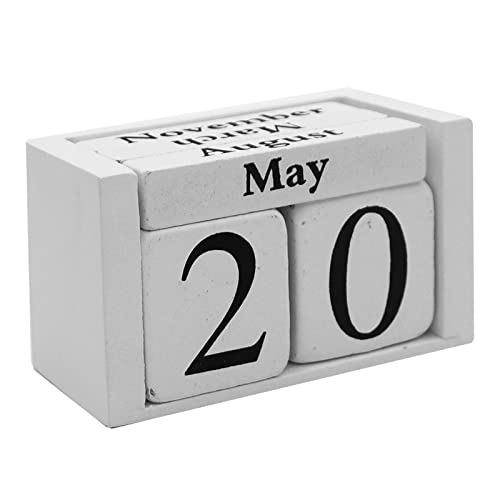
>To be specific, I didnt get how "it’s necessary to have a 0 in dice two as well in order to express all single-digit days".
Take a look at this dice calendar on Amazon.
If you had one die that did NOT have a zero, then in order to display a single digit date you would have to remove one of the dice to display the dates correctly. Thus you need a zero (or a blank) to continue to use both dice in the display for every day.
Wow, what a coincidence! I came to this page to post about a mobile game that has this kinda math puzzles in it https://play.google.com/store/apps/details?id=com.sudoculus.app